Company · March 16, 2026
Our partnership with the National Center for Asphalt Technology
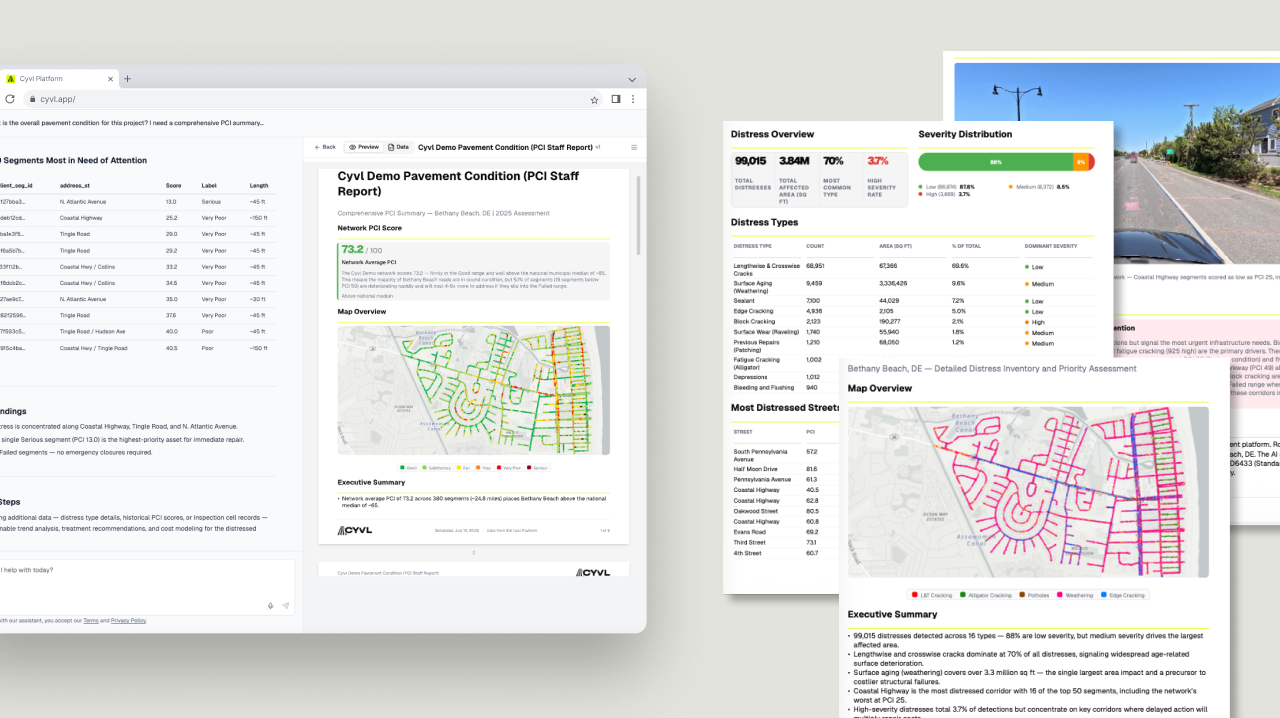
Independent validation from NCAT at Auburn University found CYVL's automated PCI scores differed from expert annotations by just 1.6 points on average — well within the ±5 tolerance defined by ASTM D6433.
Cities and towns spend billions of dollars each year maintaining their road networks. Yet many still rely on incomplete or outdated data when making decisions about how to allocate limited infrastructure budgets. CYVL was founded to address this challenge by providing cities with scalable, high-quality data about the condition of their infrastructure. To ensure its pavement assessments remain closely aligned with engineering standards used in the field, CYVL partnered with the National Center for Asphalt Technology (NCAT) at Auburn University.
Algorithms aligned with expert engineering standards
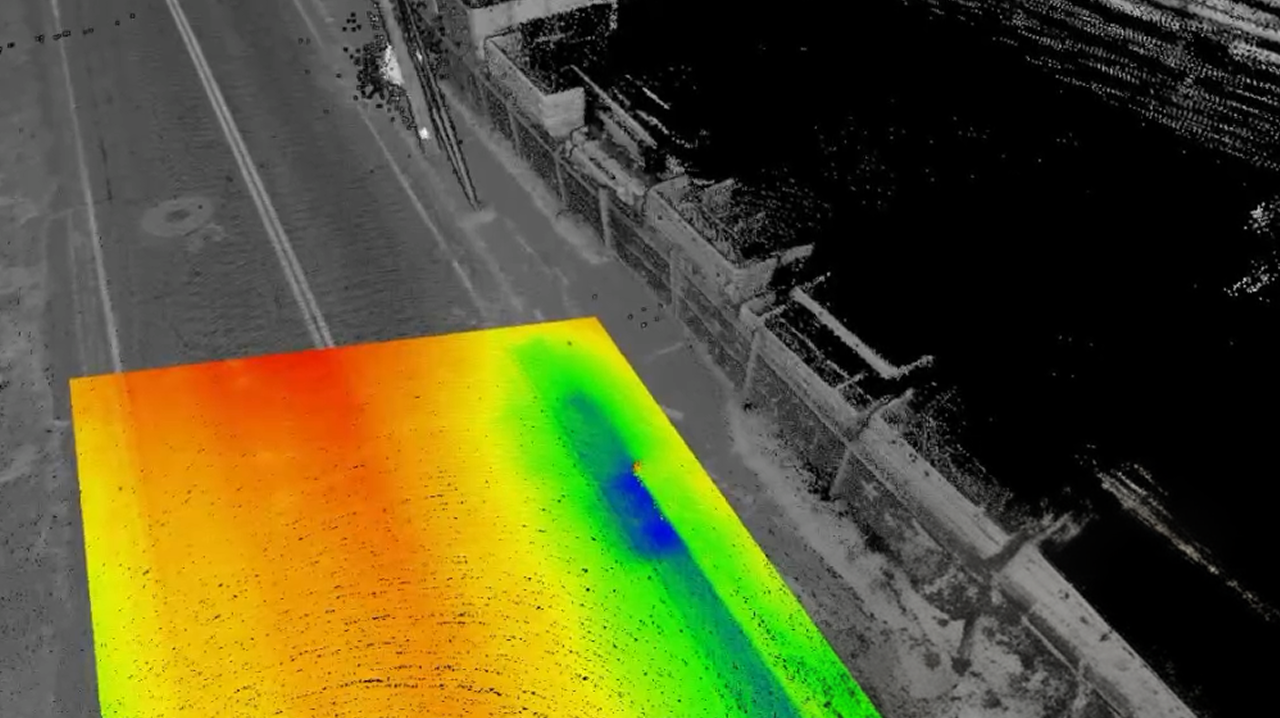
CYVL's pavement distress models rely on high-resolution imagery and LiDAR data collected by vehicle-mounted sensors, trained to identify distresses defined under ASTM D6433. To evaluate accuracy, NCAT's pavement experts hand-annotated more than 2,200 images of roadway distresses spanning rural two-lane roads to dense urban networks, then compared them directly with PCI scores generated by CYVL's automated models.
The results showed strong agreement: on average, CYVL's PCI scores differed from expert annotations by just 1.6 points — well within the ±5 tolerance defined by ASTM D6433.
Why cities are moving beyond manual surveying
Manual surveying is time-consuming, expensive, and inherently subject to human variability. A peer-reviewed study found that human PCI scores can vary by as much as 32 points when evaluating the same pavement section — far exceeding the ±5 tolerance allowed under ASTM standards. Automated assessments provide consistent, network-wide data that can be collected quickly and analyzed systematically.
“Evaluation of automated PCI results found consistently strong agreement with our expert annotations, with differences typically within industry-recognized tolerances. These outcomes illustrate how closely automated scoring can mirror traditional engineering assessments in real-world settings.”
Adriana Vargas-Nordcbeck, Ph.D., Associate Research Professor, NCAT